
Why Guitarists Still Swear by Boss Effektpedale in 2026 (And Why You Probably Need One)
01.01.2026 - 12:58:00You’ve got the riffs, the chops, the ideas. But your tone? It still sounds like “practice amp in a bedroom” instead of “headline slot at a festival.” Here’s how Boss Effektpedale quietly turned into the no?nonsense, road?proof shortcut from flat and lifeless to absolutely dialed?in.
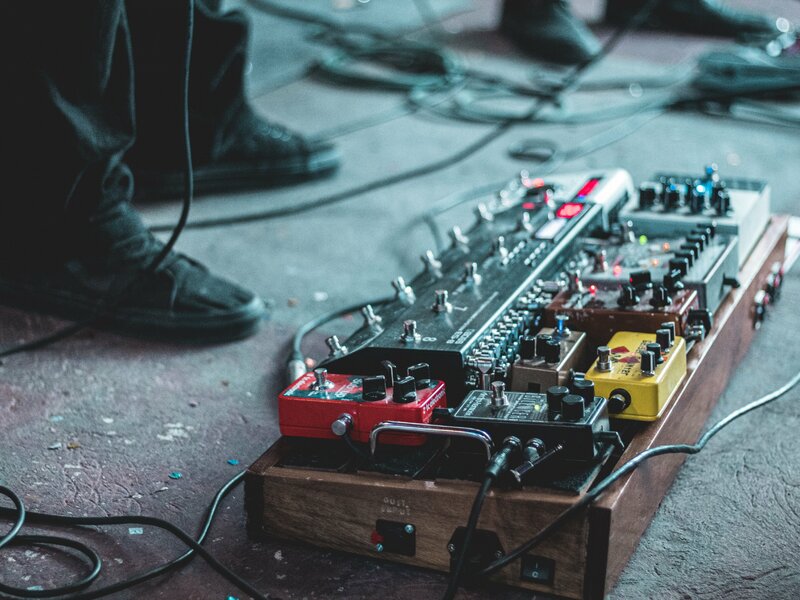
You know that moment when you hit a chord and it sounds… fine, but not finished? The notes are there. The groove is there. But the sound in your head—the one that feels huge, three-dimensional, dripping with character—never quite makes it out of the speakers.
So you start chasing tone. Endless YouTube demos. Overpriced boutique pedals with waiting lists. Multi-effects units with menus deeper than a sci-fi RPG. And somehow, your sound gets more complicated, not better. More options, more presets, more scrolling—less time actually playing.
If this feels uncomfortably familiar, you’re not alone. In 2026, the biggest problem guitarists face isn’t not having gear. It’s being buried under too much of it—and still struggling to find the one setup that just works every time, on every stage, with every amp.
That, in a sentence, is where Boss Effektpedale come in.
Boss stompboxes are the small, brightly colored rectangles you’ve seen on countless pedalboards for decades. From the legendary Boss DS-1 distortion to the Boss CE-2W chorus or Boss DD-8 delay, this family of compact pedals has quietly become the default language of guitar tone. Built by Roland Corp. (ISIN: JP3983400004), they’re the rare kind of gear that both beginners and touring pros trust with the exact same intensity.
Why this specific model?
Here’s where we need to be precise: “Boss Effektpedal” usually refers to the broad range of Boss compact stompboxes—single-purpose, rugged, analog or digital effects like overdrive, delay, chorus, compression, and more. When guitarists online talk about them, they tend to single out a few evergreen heroes:
- Boss DS-1 Distortion – the orange classic used by everyone from Nirvana-era grunge to bedroom metalheads.
- Boss SD-1 Super OverDrive – a yellow, mid-focused drive that’s a favorite as both a main tone and a boost.
- Boss DD series (DD-3T, DD-8) – digital delays that are clean, versatile, and extremely reliable live.
- Boss CE-2W Chorus – a Waza Craft reissue of the iconic CE-2/CE-1 sounds, beloved for its lush, musical modulation.
On forums and Reddit, a consistent theme comes up: while the boutique pedal world gets noisier and more expensive, Boss keeps delivering predictable, stage-ready, “set-and-forget” tone. That’s the real-world benefit. You’re not paying for hype; you’re paying for a pedal you can step on a thousand times without thinking about it.
Let’s translate some of the core Boss stompbox traits into what they actually mean when you’re playing:
- Tank-like build: These pedals are famous for being almost indestructible. Users share stories of decades-old Boss pedals that still work perfectly after being dropped, kicked, toured, spilled on, and tossed in gig bags.
- Consistent tone across generations: A DS-1 from years ago and a DS-1 you buy today sound extremely close. That makes recommendations and settings from tutorials online actually usable.
- Simple, musical controls: Most Boss Effektpedale give you 3–4 knobs, tops. No menu diving. No hidden functions you’ll forget mid-set.
- Standard form factor: Same size, same jacks, same power needs across the range. Building a board is easy, upgrading is painless.
- Massive lineup: Overdrive, fuzz, delay, modulation, pitch shifting, EQ, compression, reverbs, even synth-style pedals—there’s almost always a Boss stompbox that does exactly what you need.
In other words, a Boss Effektpedal isn’t just another box on your board; it’s a known quantity. It behaves. It survives. It sounds the way you expect, every single night.
At a Glance: The Facts
Because the Boss stompbox family is big, it’s more useful to look at the shared DNA that defines most Boss Effektpedale rather than a single model’s spec sheet. Here’s what that looks like in practice:
| Feature | User Benefit |
|---|---|
| Rugged metal chassis with footswitch and protected knobs | Survives touring, rehearsals, and being thrown into gig bags without babying your gear. |
| Standard 9V power (battery or adapter) | Works with almost any pedalboard power supply; easy to power up anywhere. |
| Compact, consistent form factor | Easy pedalboard planning; you can swap or add pedals without redesigning your layout. |
| Clear, simple control layout (usually 3–4 knobs) | Dial in tones quickly by ear; no menus, no learning curve, no manual needed mid-gig. |
| Buffered bypass circuitry | Helps maintain signal strength and clarity over long cable runs and multiple pedals. |
| Wide range of analog and digital effect types | Build a complete sound—from dirt and delay to modulation and pitch—using one unified ecosystem. |
| Long production lifespans and global availability | Easy to replace, resell, or expand your collection; you can find them nearly everywhere. |
What Users Are Saying
A quick dive into Reddit threads and guitar forums about Boss Effektpedale paints a pretty clear picture. The community sentiment is surprisingly consistent, even across different subreddits and genres.
The Pros (what people love):
- Reliability: Players routinely mention Boss pedals they’ve used for 10, 15, even 20+ years with zero failures. This is especially true for classics like the DS-1, SD-1, TU-3 tuner, and the DD-series delays.
- Value for money: Many users describe Boss as the sweet spot between $50 knockoffs and $300 boutique boxes. You get pro-ready tone at a price that makes sense on a working musician’s budget.
- Usable live tones: A recurring theme: “Maybe not the most exotic, but it just works in a mix.” Boss pedals often sit well with a band without much tweaking.
- Availability: You can walk into most music stores or shop online globally and find the popular models in stock. That’s a lifesaver when something gets lost or stolen on tour.
The Cons (where people nitpick):
- Buffered bypass vs. true bypass: Purists sometimes complain that older or classic Boss pedals aren’t true-bypass. The flip side is that many players rely on the buffer to keep their signal strong with big pedalboards.
- Not always “boutique-level” character: On Reddit, some describe certain Boss models as a bit “safe” or “sterile” compared to exotic boutique alternatives. For most players, that actually translates to “more versatile,” but if you’re chasing extremely specific vintage quirks, you might look elsewhere.
- Stock tone vs. modded culture: A whole subculture exists around modding Boss pedals (e.g., DS-1 mods). That’s a compliment, but also a hint that some users want more from the factory voicings.
Overall, the sentiment skews strongly positive: Boss Effektpedale are widely viewed as trustworthy workhorses. They may not always be the flashiest on your board, but they’re very often the ones that are on the most.
Alternatives vs. Boss Effektpedal
The current pedal market is crowded, and in 2026 you have more options than ever. So where do Boss Effektpedale sit compared to the competition?
- Boss vs. boutique builders (JHS, Strymon, etc.)
Boutique pedals often promise more features, deeper tweakability, or ultra-specific flavors of classic circuits. They can sound incredible—but they’re also pricier and sometimes harder to replace. Boss, by contrast, emphasizes practical durability and wide availability. If your Strymon dies on tour, finding the same model overnight can be tough. Finding a Boss pedal usually isn’t. - Boss vs. budget brands (Behringer, Joyo, etc.)
There are cheaper clones on the market, especially for popular circuits like the SD-1 or DS-1. Users on Reddit often warn that while these can be fine at home, build quality, switching reliability, and long-term durability can be hit or miss. Boss remains the safer bet if you play out regularly or want gear that lasts years, not months. - Boss vs. multi-effects and modelers
Multi-effects units (including Boss’s own multi-FX) are incredible for flexibility. But the trade-off is complexity: menus, presets, patches. Single Boss Effektpedale shine when you want the simplicity and immediacy of one footswitch doing one job perfectly. Many players end up with a hybrid setup—an amp modeler plus a few Boss stomps out front for their “always on” sounds.
If your priority is a curated, minimalist board that you can count on night after night, Boss’s compact stompboxes hit a very appealing middle ground: professional enough for the pros, accessible enough for beginners.
Final Verdict
At some point in your guitar journey, you realize that chasing endless options doesn’t actually make you sound better. Consistency does. Confidence does. Knowing that when you step on that pedal, it will behave exactly the way you expect—no surprises, no glitches, no “what patch am I on?” panic.
That’s the quiet magic of Boss Effektpedale.
They’re not just the colorful rectangles at every guitar shop. They’re the backbone of countless live rigs and recordings precisely because they solve the real, unsexy problems: they don’t break easily, they sound good in a mix, and they’re available pretty much anywhere in the world. Coming from a company like Roland Corp. (ISIN: JP3983400004), with decades of experience in guitar and electronic instruments, that shouldn’t be a surprise.
If your tone feels stuck in “almost there” territory, the solution isn’t another week of watching demos. It might be as simple as adding one or two well-chosen Boss pedals to your board:
- A DS-1 or SD-1 to tighten up your drive and give your amp some attitude.
- A DD-series delay for instantly musical repeats that make solos and clean parts come alive.
- A CE-2W or other modulation pedal to add width, depth, and movement to otherwise plain chords.
Start small. One pedal. One sound you absolutely love. Then build from there. That’s how so many of the pedalboards you admire started: with a single Boss Effektpedal that did its job so well, it never left.
If you’re ready to stop fighting your gear and start enjoying your playing again, Boss’s stompbox lineup is still one of the smartest, most future-proof places to begin. No drama. No hype. Just tones that work—night after night, song after song.
Explore the current Boss Effektpedal lineup here and see which color belongs on your board next.


