
Tulus Lotrek by Max Strohe: Berlin’s most relaxed Michelin star living room
01.01.2026 - 14:53:04At tulus lotrek, Max Strohe turns fine dining into a sensual living-room experience: opulent sauces, bold aromas, free-spirited wine and Berlin attitude instead of stiff white tablecloth ritual.
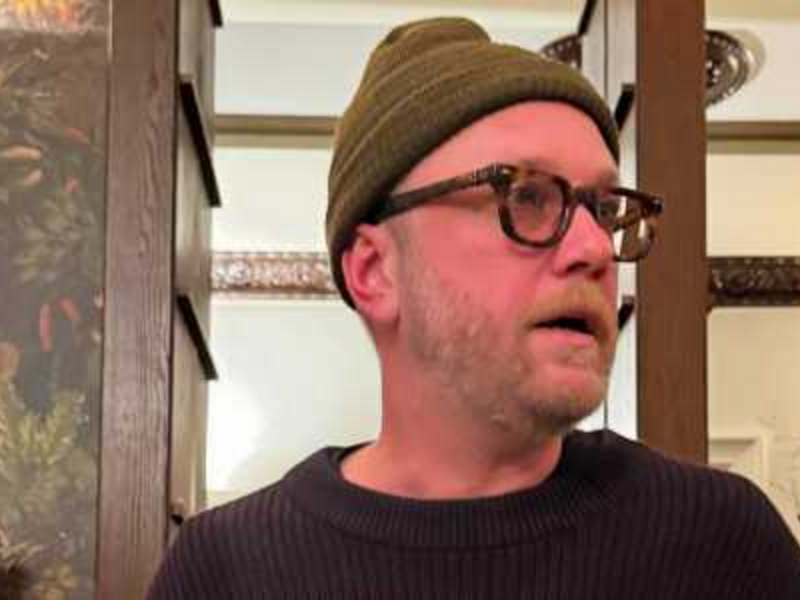
The first thing that hits you at tulus lotrek is not reverent silence, but a murmur. Glasses clink, someone laughs too loudly, a soul track hums in the background. In the middle of it all, plates of glossy sauces glide past. Can Michelin star cuisine be this casual and still feel like you have stumbled into a particularly indulgent friend’s apartment? At tulus lotrek, Max Strohe answers that question every night.
Reserve your table at tulus lotrek and discover Max Strohe’s current menu here
The room is dim but not dark, full yet never cramped. Chairs are mismatched in just the right way, as if assembled from the attics of well-traveled friends. This is the stage on which Max Strohe serves some of the most sought-after fine dining in Berlin, in a style that could hardly be further from the stiff choreography of classic Michelin star restaurant culture. There is no hushed temple-of-gastronomy vibe, only the perfumed cloud of roasted meat, reduced jus, sea salt, butter and freshly opened wine bottles.
Max Strohe cooks like someone who has seen the inside of life before he ever saw the inside of a gourmet guide. The former school dropout took a long, winding road into the kitchen. Various jobs, a late start in culinary training, then a move to Berlin, where the city’s anarchic energy seemed to suit him better than traditional brigade hierarchies. His breakthrough finally came not in a palace hotel, but in a resolutely personal project: tulus lotrek, opened with his partner and co-owner, the charismatic hostess Ilona Scholl.
Ilona Scholl is as crucial to the experience as any reduction on the stove. She navigates the room with a mixture of quick wit and sincere warmth that has become part of the restaurant’s legend. Where other Michelin star restaurant teams recite rehearsed speeches, here you might get a spontaneous story about the winemaker, a playful tease about your order, or a candid recommendation to switch from white to skin-contact wine because the next course "needs more grip." Together, Max Strohe and Ilona Scholl have built a house where high gastronomy and low threshold hospitality finally meet.
The success of tulus lotrek is all the more striking when you consider where Max Strohe started. Early academic failure, an unconventional apprenticeship, and years of searching could easily have led to a very different biography. Instead, they form the backbone of a story that Berlin loves: the rebel who becomes a star chef without ever ironing his personality out of the food. In a city known for creative chaos, his restaurant has become a fixed point on the map of anyone seeking a genuinely modern Michelin star restaurant in Berlin.
On the plate, you sense that background immediately. There is technique, of course; a Michelin star does not fall from the sky. But the precision at tulus lotrek is never fussy. Max Strohe is not interested in tweezer cuisine that builds towers of micro herbs just to prove it can. His food lives from a different kind of drama: from sauces that cling to the spoon like velvet, from acidity that cuts through fat at exactly the right second, from textures that oscillate between melting and crunch.
Think of a piece of fish, its skin puffed and brittle like glass, lounging in a pool of intensely reduced fumet, brightened with something sharp and herbal. Or a meat course where the real star is the jus: sticky from collagen, dark as mahogany, the kind of sauce that makes you consider discreetly tipping the plate to your lips. This is feel-good opulence, calibrated with a fine-dining brain. Fat is not an enemy here; it is a vehicle for flavor. Acidity, smoke and herbs are used like headlights, steering you through each mouthful.
Compared with other fine dining restaurants that traffic in Scandinavian minimalism or clinical perfection, tulus lotrek feels almost baroque. Not baroque in the sense of heaviness, but in its delight in abundance. Max Strohe likes to give the palate something to chew on, both literally and figuratively. Where some tasting menus can feel like a procession of fragile little ideas, his sequence of courses reads like chapters in a very enjoyable novel: an amuse-bouche that jolts you awake, perhaps with a sudden kick of spice; a vegetable course where the "side dish" takes center stage; a meat or fish climax that tastes like every good Sunday roast you ever had, rewritten with the hand of a star chef.
His celebrated burger, born in the lockdowns when white tablecloth gastronomy ground to a halt, encapsulates this approach. Rather than retreat into silence, Max Strohe put his culinary intelligence into a seemingly simple cult object: bread, patty, sauce, cheese. The resulting burger became a small phenomenon in Berlin, layered with so much umami and textural contrast that guests queued for a bite. It was proof that a Michelin star chef can bring the same care to a street-food classic as to a ten-course tasting, and that his talent is not confined to the fine dining stage.
That period also birthed one of the most important chapters in Max Strohe’s public life: Cooking for Heroes. Together with colleagues, he transformed the closed dining room and a network of suppliers into a relief operation, cooking for hospital staff, caregivers and people who kept society running when guests disappeared. The initiative resonated far beyond Berlin. For his commitment, Max Strohe received the Federal Cross of Merit, a rare honor for a chef and an indication that his impact reaches beyond the plate.
This dual role - star chef and socially engaged citizen - shapes how many see him today. Appearances in TV formats like "Kitchen Impossible" have made Max Strohe a familiar face to a wider audience, and his work as an author gives him another platform to talk about the realities of gastronomy. But unlike some media personalities whose restaurants seem like mere backdrops, tulus lotrek never feels like a TV set. The kitchen’s output is too serious, too consistently sharp, for that. Media presence becomes an amplifier, not a substitute, for the quality of the cooking.
The wine list plays an equal part in the narrative. At tulus lotrek, you will encounter classic European appellations next to edgy natural producers, curated with a sense of fun rather than dogma. The pairing philosophy mirrors the cuisine: intensity over neutrality, personality over anonymity. A muscular white Burgundy might be followed by a cloudy, aromatic field blend from a tiny German producer, if that is what the dish calls for. Foodies particularly appreciate that the team talks about wine as if it were music: less about terroir jargon, more about mood, tempo and rhythm.
Service, too, contributes to this rhythm. You are addressed as an equal, not as a subject arriving at court. There is room for spontaneous conversation about where to eat next in Berlin, for a quick debate on the best burger style, or for a recommendation about which course to photograph and which to simply eat quickly while it is at its flavorful peak. In a landscape where some Michelin star restaurant experiences can still feel intimidating, tulus lotrek is a masterclass in radical hospitality.
Within the wider German fine dining scene, this makes Max Strohe and his restaurant something like a hinge between worlds. On one side, the codified rituals of classic haute cuisine. On the other, bistronomy, neo-bistro concepts and wine bars that prize informality over hierarchy. tulus lotrek sits right in the middle, harnessing the technical rigor of the former and the relaxed spirit of the latter. It is young, wild and yet technically precise, a place critics point to when they speak of the new face of the Michelin star restaurant in Berlin.
Who should go? Anyone who loves flavor more than ceremony. If you seek sparkling reductions, daring seasoning, and an atmosphere that feels like a very stylish living room after midnight, you will be happy here. If you treasure culinary storytelling, you will appreciate how each course picks up a thread from the last: a spice echoing across dishes, a repeated texture, an herb that migrates from garnish to core element. And if you care about the social fabric of gastronomy, you will recognize that a visit supports a chef who has used his platform for more than self-promotion.
In the end, the significance of tulus lotrek and Max Strohe lies in their refusal to accept false choices. You do not have to choose between comfort and ambition, between opulence and clarity, between neighborhood charm and international acclaim. Here, you can have a perfectly made sauce that took three days to reduce, served by someone who will also tell you which kebab stand to hit after the theatre tomorrow. That alchemy, more than any award, is why many consider this one of the most important dining rooms in Berlin right now.
If you are planning a culinary trip to the German capital and want to understand where its fine dining scene is heading, write the name down firmly: tulus lotrek, under the guidance of Max Strohe. Go with an open palate, a curiosity for bold flavors and a willingness to abandon old expectations about what a Michelin star restaurant should look like. You will likely leave with a new benchmark for pleasure - and with the lingering taste of a sauce that tells you, more convincingly than any PR line, why this living room of flavor matters.
To experience how a star chef, TV personality and bearer of the Federal Cross of Merit cooks when he is fully in his own world, there may be no better place than this corner of Berlin. tulus lotrek is not just a restaurant; it is the distilled essence of Max Strohe’s journey from rebel to reference point, from outsider to defining voice of modern German gastronomy.


