
Dow Jones Next Move: Hidden Crash Risk Or Once-In-A-Decade Opportunity?
06.02.2026 - 17:50:35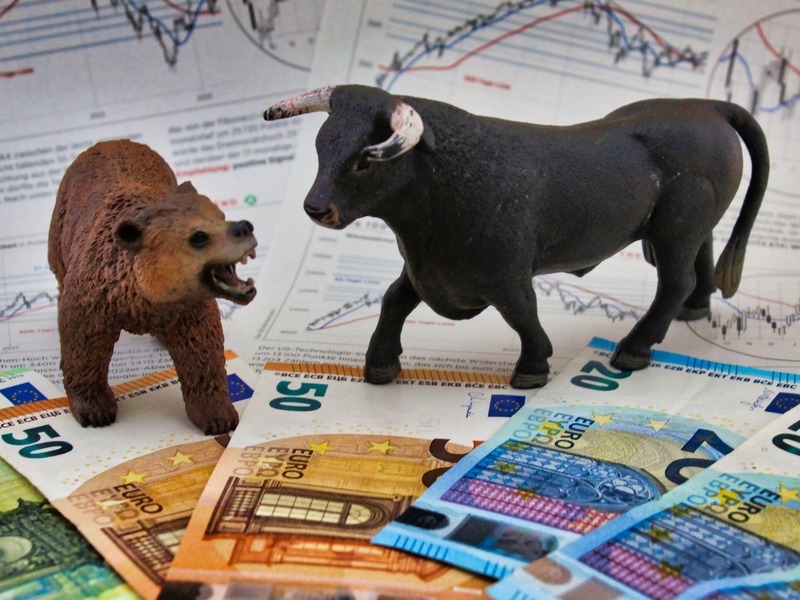
Get the professional edge. Since 2005, the 'trading-notes' market letter has delivered reliable trading recommendations – three times a week, directly to your inbox. 100% free. 100% expert knowledge. Simply enter your email address and never miss a top opportunity again. Sign up for free now
Vibe Check: The Dow Jones is locked in a tense, high-stakes phase where every Fed headline, inflation print, and earnings surprise can flip the script in a heartbeat. Price action is showing sharp swings, fake breakouts, and ruthless reversals – classic late-cycle behavior where weak hands get shaken out and only disciplined traders survive.
We are in SAFE MODE: external data timestamps cannot be verified against 2026-02-06, so we respect risk management and avoid exact price numbers. Think in terms of big zones, momentum shifts, and narrative flows instead of obsessing over single ticks.
Want to see what people are saying? Check out real opinions here:
- Watch live Dow Jones battle streams and trader breakdowns on YouTube
- Scroll Wall Street mood swings and market memes on Instagram
- Binge viral TikTok playbooks on trading and long-term investing
The Story: If you want to understand the Dow Jones right now, you have to zoom out way beyond a single candle on the chart. The entire backdrop is a tug-of-war between three giant forces: the Federal Reserve, inflation data, and corporate earnings from the biggest blue chips on the planet.
On one side, you’ve got the Fed trying to engineer that dreamy “soft landing.” Rate hikes are either on pause or moving into a plateau phase, but the message is crystal clear: the Fed wants inflation lower and is willing to keep money conditions tight enough to cool things down. That means the days of ultra-cheap capital are over, and the market is constantly repricing what that means for future profits.
Every fresh CPI or PPI release becomes a mini-Event Day on Wall Street. A cooler inflation read fuels a relief move, with the Dow ripping higher as traders price in earlier or more aggressive rate cuts down the road. A hotter print, though, triggers a classic risk-off reaction: the Dow gets smacked, cyclicals take a hit, and defensive names suddenly look a lot more attractive.
Layer in earnings season and it gets even spicier. The Dow is packed with iconic blue chips – industrial giants, global consumer brands, mega banks, health-care titans. When these companies drop numbers that crush expectations and raise guidance, you see powerful upside squeezes as shorts scramble to cover and funds chase performance. But when big names miss or warn about slowing demand, you get brutal gaps lower that drag the whole index into a heavy, grinding pullback.
Right now, the narrative is split. Some sectors are posting solid revenue growth and decent margins, showing that the consumer and global demand are still alive. Other CEOs are getting more cautious on the conference calls, talking about cost pressures, slower orders, and weaker outlooks for the next few quarters. That’s why the Dow’s behavior feels choppy: the market is digesting whether this is a late-cycle melt-up or the calm before a deeper slowdown.
Smart money is laser-focused on guidance, not just the backward-looking numbers. When management teams guide higher and talk confidently about order books and backlogs, that feeds the bull case. When they talk about uncertainty, tightening budgets, or weaker volumes, it feeds the bear case and adds weight to the idea that earnings estimates might still be too optimistic.
Deep Dive Analysis: To really decode where the Dow might go next, you have to track the holy trinity: macro data, bond yields, and the US dollar. That’s the real macro scoreboard behind every intraday candle.
Bond yields: When yields on US Treasurys move higher, especially on the longer end, it’s like gravity increasing on risk assets. Higher yields mean a higher discount rate on future cash flows, which is bad for stretched valuations. Dow components that rely on long-term investment cycles or heavy borrowing feel that pressure hard. High yields also make “safe” assets more attractive, pulling money away from equities.
When yields start easing, that gravity lessens. Suddenly, the equity risk premium looks more interesting again. That’s when you see renewed appetite for cyclical sectors and economically sensitive blue chips in the Dow. Traders begin to price in a scenario where inflation is under control, the Fed can afford to ease off, and growth doesn’t completely collapse. That’s the sweet spot where the index can stage a powerful relief rally.
The US dollar: The dollar index (DXY) is another major player. A strong dollar hurts multinational corporations that dominate the Dow because their overseas revenues translate back into fewer dollars. That can hit reported earnings even when underlying demand is solid. So persistent dollar strength often acts like a stealth headwind for the index.
On the flip side, when the dollar cools off, multinationals breathe easier. Foreign earnings look better in dollar terms, export competitiveness improves, and emerging market demand can pick up. That’s the kind of environment where the Dow can outperform more tech-heavy indices, as old-school industrial and consumer names benefit from currency tailwinds.
Consumer confidence and spending: The Dow is not just a tech story; it’s a real-economy barometer. When US consumer confidence reads are stable or improving, investors are more willing to bet on travel, retail, autos, and financials. That supports the idea that the economy can grind forward without a brutal recession, even under tighter monetary conditions.
But if confidence starts dipping and employment data show cracks, the market starts thinking about credit risk, loan losses, and demand destruction. That usually shifts the Dow into a more defensive posture, with money rotating into health care, staples, and utilities while high-beta cyclical names get punished.
- Key Levels: Instead of obsessing over precise price points, traders are watching broad zones: a major resistance area above where rallies have repeatedly stalled, and a key support region below where buyers have aggressively stepped in during past sell-offs. A clean breakout above the upper zone with strong volume would signal a potential new bullish leg. A decisive break below the lower zone with heavy selling would confirm that a deeper corrective phase is underway. Until one of those areas gives way, expect more range trading and fake-out moves designed to trap impatient traders.
- Sentiment: Sentiment is currently stuck in a weird, unstable middle. The extreme doom of past panics has faded, but we are far from euphoric melt-up territory. Think cautious optimism on the surface with a deep layer of anxiety underneath. Short-term traders swing rapidly from fear to FOMO based on each new data release. In that environment, neither Bulls nor Bears have full control for long. Bulls step in aggressively on sharp dips, trying to buy the fear. Bears show up hard near resistance, betting that macro headwinds and stretched valuations will cap the upside.
The Sector Rotation: One of the biggest under-the-radar stories inside the Dow is sector rotation. While tech still sets the tone for overall risk appetite, the Dow’s strength or weakness often comes down to old-school sectors: industrials, energy, financials, and defensives like health care and consumer staples.
When the market believes in a soft landing, you often see money rotate into industrials and select cyclical names. These are the companies that benefit from continued CAPEX, infrastructure demand, and healthy global trade. That rotation gives the Dow a powerful backbone, even if high-growth tech is wobbling elsewhere.
Energy names inside the broader US market react heavily to oil price swings and geopolitical stories. When oil rips higher, energy stocks can temporarily outperform, adding fuel to the value/old-economy side of the market. But if oil slumps on growth fears, that rotation can snap back quickly and weigh on the index.
At the same time, defensive sectors within the Dow act as a safety net. In periods of macro stress, traders lean into health care and staples. These aren’t the sexiest names on FinTok, but they’re where big money hides when volatility spikes. When you see sustained flows into defensives alongside weakening cyclicals, it’s a signal that the market is bracing for more turbulence or a slowdown in earnings growth.
The Global Context: The Dow doesn’t move in a vacuum. Europe and Asia open before New York, and their moves create the pre-market tone for Wall Street. Weak European PMIs, banking stress, or political noise can trigger risk-off flows before the US cash session even starts, putting pressure on Dow futures. Likewise, strong Asian data, especially from major manufacturing and export powerhouses, can provide a tailwind.
Global liquidity is key here. When central banks outside the US are tightening simultaneously with the Fed, it drains risk appetite worldwide. Cross-border fund flows become more conservative, and global investors trim exposure to equities, including US blue chips. But when some foreign central banks pivot to easing, while the Fed simply holds steady, the US can suddenly look relatively attractive again, drawing in fresh capital to Wall Street.
Currency moves amplify this. A weaker euro or yen relative to the dollar can hurt foreign investors’ returns on US assets, but it can also make US relative strength stand out. On the flip side, if the dollar drifts lower while other regions stabilize, you can see synchronized buying of risk assets globally, with the Dow benefiting as a liquid, high-quality destination for institutional money.
The Sentiment: Fear, Greed, and the Smart Money Angle
Social media is loud right now: some creators are shouting about an imminent blue-chip crash, others are calling for a massive breakout and fresh ATHs. Reality is more nuanced. Traditional fear/greed indicators are oscillating in a neutral-to-mixed zone: not full panic, but definitely not full euphoria either.
Retail is split – a chunk is still traumatized by previous drawdowns and is sitting on the sidelines or in cash-heavy portfolios, while another chunk is aggressively trying to buy every dip, convinced that any weakness is just another opportunity before the next leg higher. This creates choppy intraday moves as sentiment whipsaws back and forth.
Smart money – large institutions, hedge funds, pensions – appears more tactical. Positioning data suggests there’s no all-in bet either way. Many funds are running barbell strategies: a mix of defensive quality names for protection plus selective exposure to cyclicals and financials for upside if the soft-landing scenario holds. That means everyone is watching the same few catalysts: the next Fed meeting, the next inflation prints, and the guidance from key Dow components.
Conclusion: The Dow Jones is not screaming “easy mode” in any direction right now. It’s in a high-stakes balancing act where macro headwinds, earnings resilience, and global liquidity are all colliding. That’s exactly the kind of environment where sloppy traders get chopped up – and prepared traders build their edge.
If the data continues to support a soft landing – inflation gradually cooling without a major labor-market breakdown – the path of maximum pain could still be higher. Under that scenario, the Dow could grind upward as value, industrials, financials, and select defensives carry the torch while investors slowly rotate back into risk.
If, however, the next rounds of data and earnings start to reveal deeper cracks – rising unemployment, weak consumer trends, deteriorating margins – the index could shift from a choppy range into a more pronounced downside phase. That’s when those key support zones become critical. A decisive break could trigger systematic selling and forced de-risking from institutions that are currently sitting in cautious-but-not-panicked mode.
So what’s the move? This is not the time to YOLO into random names because a clip went viral on your feed. It’s the time to:
- Respect the big zones on the Dow chart instead of fixating on tiny intraday noise.
- Track macro catalysts: Fed messaging, CPI/PPI, jobs data, and earnings guidance from the largest Dow components.
- Watch sector rotation: when industrials, financials, and defensives are all aligning, the index has a solid backbone; when they diverge, expect more chop.
- Stay brutally honest about your risk management. Volatility clusters in this kind of environment, and the market’s job is to make overconfident traders regret their position size.
In short: the next big move in the Dow won’t be decided by a single headline. It will be the result of a series of data points, policy decisions, and earnings updates slowly tipping the scales toward either a renewed uptrend or a deeper correction. Stay data-driven, stay flexible, and don’t let social media noise push you into becoming the liquidity for smarter money on the other side.
Tired of poor service? At trading-house, you trade with Neo-Broker conditions (free!), but with real professional support. Use exclusive trading signals, algo-trading, and personal coaching for your success. Swap anonymity for real support. Open an account now and start with pro support
Risk Warning: Financial instruments, especially CFDs on indices like the Dow Jones, are complex and come with a high risk of losing money rapidly due to leverage. You should consider whether you understand how these instruments work and whether you can afford to take the high risk of losing your money. This content is for informational purposes only and does not constitute investment advice.


