
Bitcoin Risk explodes: violent swings, looming crackdowns and the real threat of total loss
18.01.2026 - 19:06:21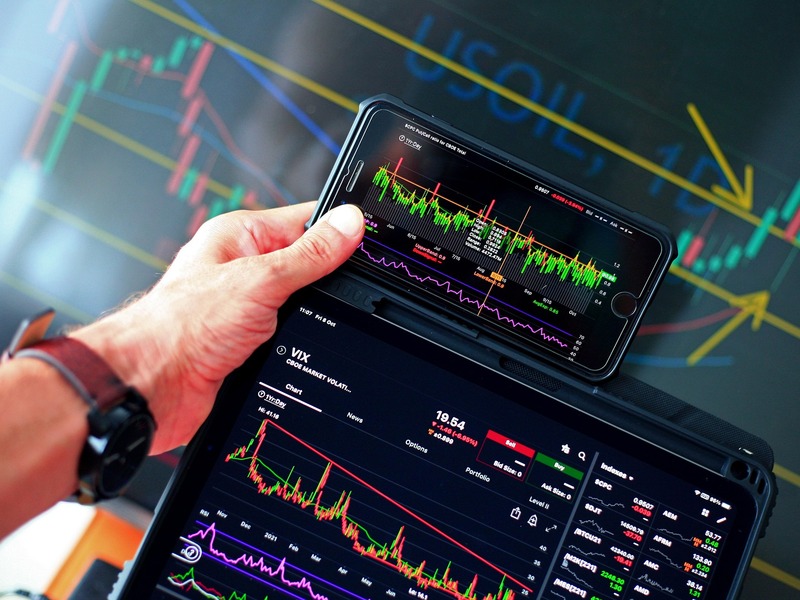
The Bitcoin Risk story is written in blood?red candles: in mid?January, Bitcoin briefly punched above $49,000 after the U.S. spot ETF approvals, only to reverse by more than 15% within days; in late January it sank from around $43,000 to near $38,500 in a sharp downswing of roughly 10% in 24 hours, and in the last three months it has repeatedly swung more than 8–12% in a single trading day. As recently as early March, Bitcoin spiked toward the high $60,000s and then dropped back by several thousand dollars in hours. These are not mild corrections – these are violent shocks where five?figure sums can vanish from a retail account in a single session. Is this still investing, or just a casino?
For hard?nosed risk?takers: Open a trading account and trade the Bitcoin Risk volatility now
In recent days, warning lights have been flashing across the crypto landscape. U.S. regulators have kept up pressure: the SEC has continued its aggressive stance against unregistered crypto products and platforms, and fresh enforcement actions against exchanges and token issuers remind investors that regulatory risk is far from priced out. European supervisors under ESMA have reiterated concerns about the marketing of highly speculative crypto derivatives to retail clients, flagging the potential for sudden, catastrophic losses. At the same time, macro headwinds – renewed fears of higher?for?longer interest rates and persistent inflation surprises – threaten to drain liquidity from all risk assets, with Bitcoin often selling off sharply whenever bond yields jump or the Federal Reserve signals tighter policy.
There have also been new reports of exchange hacks and security breaches, where attackers siphoned off millions in digital assets from vulnerable platforms and DeFi protocols. Even when the Bitcoin blockchain itself remains intact, your personal exposure sits on centralized exchanges and wallet providers that can be hacked, mismanaged, or frozen by authorities. In this fragile environment, a sharp reversal in sentiment – perhaps triggered by a high?profile enforcement action, another major hack, or a broader risk?off episode in global markets – could ignite a disorderly liquidation wave. When heavily leveraged traders are forced to unwind, prices can plummet in minutes, not days, amplifying the Bitcoin Risk far beyond what a typical stock investor is used to.
Understanding the deep structural risks is essential. Bitcoin does not come with deposit insurance or state guarantees: if your broker collapses, your exchange is hacked, or you lose private keys, your position can be wiped out with no recourse. Unlike regulated bank deposits protected by deposit guarantee schemes, or diversified stock portfolios backed by claims on real companies with cash flow and assets, Bitcoin is a purely speculative instrument whose value rests almost entirely on market psychology. When sentiment turns, there is no central bank, no balance sheet, no stream of dividends to cushion the fall.
A total loss scenario is not theoretical. Consider the chain of vulnerabilities: you may use margin or leveraged derivatives to amplify returns; if price moves 10–15% against you in a single day – something that has happened repeatedly in recent months – your entire margin can be obliterated and your position liquidated at the bottom. If that happens during a liquidity crunch or flash crash, slippage can push your exit price even lower than expected. On top of market risk, there is counterparty risk: if a lightly regulated offshore exchange fails, freezes withdrawals, or engages in fraud, your coins can evaporate overnight regardless of what the Bitcoin price does on paper.
Compared with regulated investments such as broad equity index funds, investment?grade bonds, or even physical gold, Bitcoin stands at the far extreme of the risk spectrum. Stocks represent ownership in businesses with tangible assets, revenues and – in many cases – dividends. Bonds are contractual claims with defined interest payments and legal protections. Gold has a centuries?long track record as a store of value, widely accepted and physically scarce. Bitcoin, by contrast, has no intrinsic cash flow and no universally accepted industrial use; its scarcity is purely digital and its valuation is driven by expectations that someone else will pay more later. This speculative structure intensifies the Bitcoin Risk and makes it fundamentally unsuitable as a core savings vehicle for conservative households.
International regulators have repeatedly warned that retail clients often underestimate these dangers, especially when trading via complex products such as CFDs, perpetual futures or options that allow high leverage. A 5x leveraged long position in Bitcoin can be destroyed by a 20% move against you – a move that the last quarter has shown can occur within a handful of trading sessions, or even faster around major news. Interest rate shocks, regulatory crackdowns, exchange hacks, or simple herd panic can all interact to create a vicious spiral of selling, margin calls and forced liquidations.
From a risk?management perspective, it is vital to recognize that Bitcoin behaves more like a high?beta speculative instrument than a traditional investment. Correlations with tech stocks and other risk assets can spike during stress, undermining the idea that crypto reliably diversifies a portfolio. Volatility clusters: periods of apparent calm are frequently followed by abrupt, violent swings. If your financial plan is built on stability – predictable savings, long?term retirement goals, or preserving capital – blindly wading into this market without strict position sizing and predefined loss limits is closer to gambling than to investing.
For conservative savers, retirees, or anyone who cannot rebuild lost capital easily, this market is simply not appropriate. The potential for quick gains is inseparable from the possibility that your stake could be cut in half, or reduced to zero, in a shock event. Emotional stress, sleepless nights, and the temptation to chase losses often make outcomes even worse. A sensible approach is to treat Bitcoin – if you insist on touching it at all – strictly as "play money": a small, clearly segregated amount of disposable income that you can afford, psychologically and financially, to lose entirely without jeopardizing your lifestyle, your debt obligations, or your long?term security.
The brutal truth is that this arena rewards discipline, risk capital, and the ability to absorb sudden, deep drawdowns – not hope, not hype, and certainly not money that you need for rent, education, or retirement. If you are looking for a safe place for savings, Bitcoin is the wrong address. If, however, you are fully aware of the danger, have a robust risk?management plan, and consciously accept that a total loss is on the table, then and only then does actively trading this market become a calculated speculation rather than an unthinking gamble.
Ignore all warnings & open a trading account to trade Bitcoin Risk anyway


